Solo winter bushcraft offers a unique opportunity to experience nature in its purest form. With snow covering the landscape and temperatures dropping below freezing, every task becomes more challenging and rewarding. This adventure took place deep in the winter wilderness, far from busy trails and crowded campsites.
The forest was quiet beneath a fresh blanket of snow. The only sounds were the crunch of boots on the frozen ground and the occasional movement of wildlife hidden among the trees. These peaceful moments are one of the main reasons many outdoor enthusiasts enjoy winter bushcraft.
Choosing a suitable campsite is one of the most important skills in winter camping. Protection from wind, access to firewood and safe terrain all play a role in creating a comfortable camp.
After exploring the area, I found a sheltered location surrounded by trees. The spot provided natural protection from the cold wind while offering enough space to build a fire and prepare camp for the night.
Firewood is essential during winter bushcraft adventures. A reliable fire provides warmth, allows water to be heated and makes outdoor cooking possible. Finding dry wood after snowfall can be difficult, but dead standing trees often provide excellent fuel.
Collecting and processing wood takes more effort in winter, but it becomes part of the overall bushcraft experience. Every piece of wood gathered contributes to a safer and more comfortable camp.
Starting a fire on snow requires preparation and patience. A solid base helps prevent the fire from sinking into the snow as heat begins to melt the surface beneath it.
Once the fire was established, it quickly became the center of camp. The warmth of the flames created a welcome contrast to the cold winter air and transformed the snowy campsite into a comfortable outdoor living space.
One of the most enjoyable aspects of bushcraft is learning to work with natural materials and adapting to changing conditions. Winter environments add an extra layer of challenge that makes even simple tasks feel meaningful.
Preparing camp, gathering wood and maintaining a fire require focus and effort. These activities encourage a slower pace and a deeper appreciation for the surrounding wilderness.
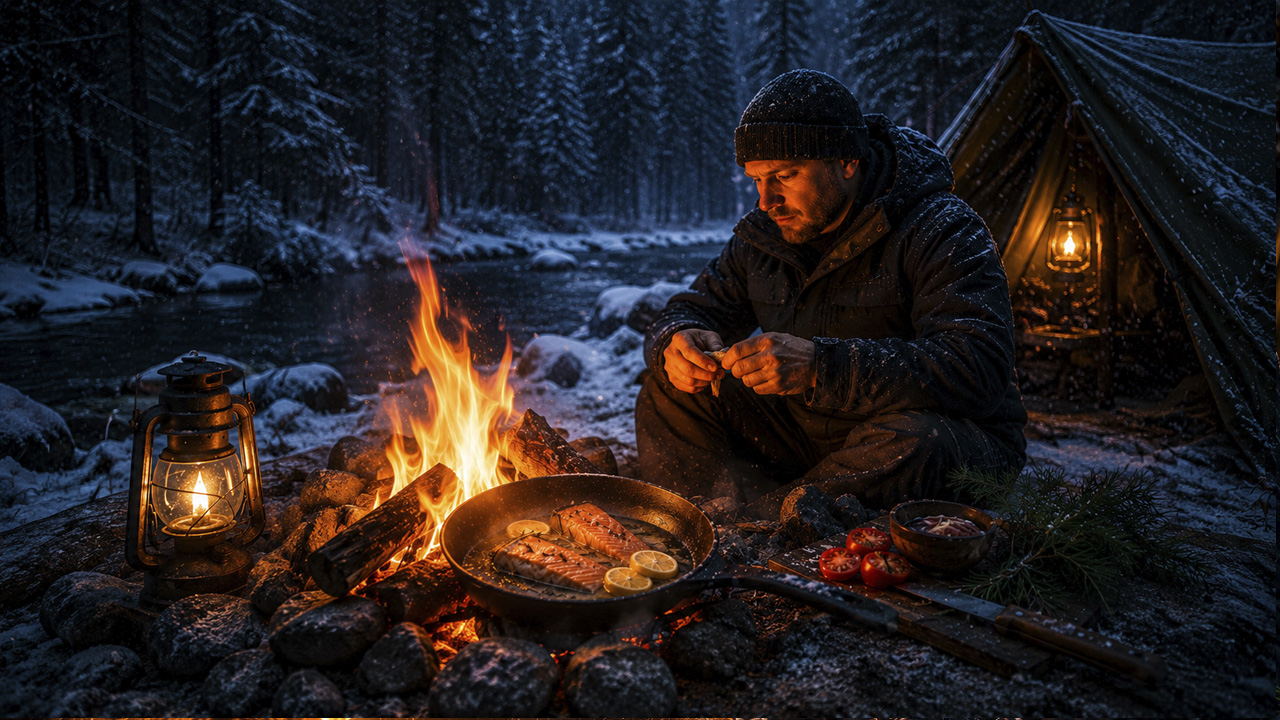
As daylight faded, the campfire became the heart of the campsite. The glow of the flames reflected off the snow while the surrounding forest slowly disappeared into darkness.
Moments like these highlight the beauty of winter camping. Far from modern distractions, the simple combination of fire, shelter and nature creates a rewarding outdoor experience.
Many people avoid camping during the colder months, but winter offers some of the most beautiful and peaceful outdoor conditions of the year. Snow-covered landscapes provide stunning scenery while reduced visitor numbers create a greater sense of solitude.
For those willing to prepare properly, winter bushcraft can be both challenging and deeply satisfying. Every successful fire, warm meal and comfortable camp becomes a reminder of the value of outdoor skills.
Solo winter bushcraft in the snow combines adventure, self-reliance and a deep connection with nature. Whether building a campfire, gathering firewood or simply enjoying the silence of a snowy forest, every moment becomes part of a memorable wilderness experience.
Winter camping is not always easy, but the rewards are significant. The peaceful atmosphere, beautiful scenery and satisfaction of living comfortably in cold conditions make solo bushcraft adventures worth every effort.